
Six Hats of Thinking

As I delved into my studies this year, I came across the Six Hats of Thinking method by Edward de Bono, which was introduced to me as part of the Reflective Practice module. Through implementing this innovative approach, I have witnessed a significant enhancement in my problem-solving abilities. This method has not only facilitated structured analysis but has also sparked creativity and effectively managed my thought process as I tackled my current project.
In the midst of conceptualizing a suicide prevention app for my major project, I have adopted the Six Hats of Thinking approach to navigate through the complexities systematically. By utilizing this strategy, I have been able to explore varied perspectives and delve deeper into the intricacies of the project, allowing for a more comprehensive and thorough analysis.
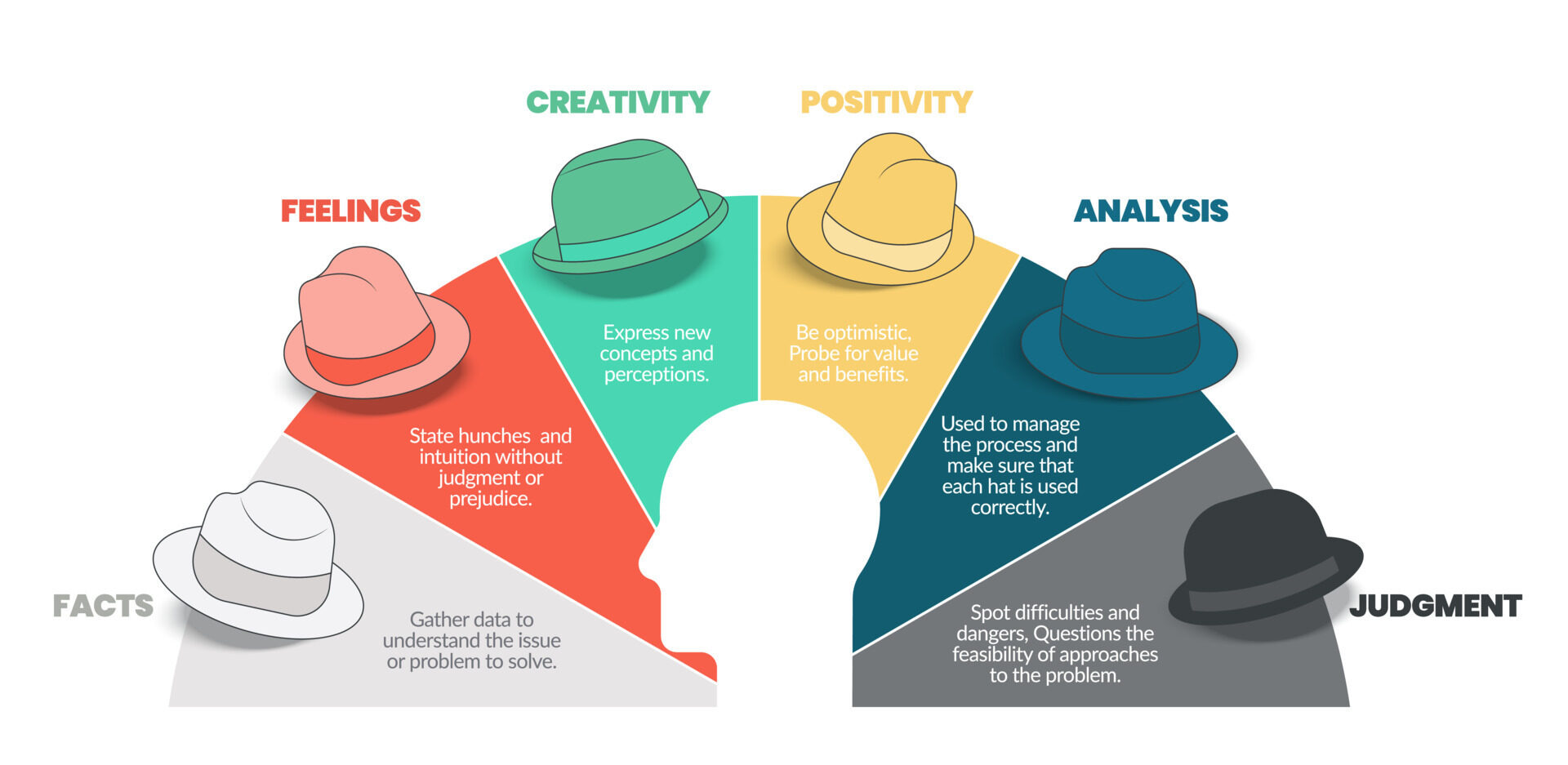 White Hat: I’m gathering thorough information, data, and conducting research to inform my design process.
Red Hat: My emotional response is driven by a desire to create a user-friendly app that provides crucial help to those in need, reflecting empathy and compassion.
Black Hat: While recognizing potential challenges, I’m challenging assumptions to create a robust tool for users in crisis.
Yellow Hat: I anticipate highlighting the empowering tools, user-friendly interface, supportive community, accessible resources, and positive impact on well-being as the potential benefits of my app.
Green Hat: I’m brainstorming innovative ideas such as fostering a supportive online community, enhancing personalization, and iterating design based on user feedback.
Blue Hat: I’m planning to manage project planning, resource allocation, quality assurance, and feedback integration to ensure successful development and alignment with project goals.
SWOT ANALYSIS
Moreover, in addition to the Six Hats of Thinking method, incorporating a SWOT analysis has further fortified my decision-making process. By carefully evaluating the strengths, weaknesses, opportunities, and threats associated with my project, I have been able to develop a well-rounded and strategic approach towards addressing the challenges at hand.
| Strength | Weaknesses |
| – User-friendly interface for easy navigation. – Empowering tools to provide effective support. – Supportive online community fostering a sense of belonging. – Accessible resources for users in crisis. |
– Potential lack of expertise in mental health counselling among app developers. -Time management constraints due to part-time job commitments. |
| Opportunities | Threats |
| – Collaboration with mental health professionals to enhance app effectiveness. – Expansion of features to cater to diverse user needs. – Integration of emerging technologies such as AI for personalized support. |
– Competition from existing mental health apps with established user bases. – Regulatory challenges related to data privacy and compliance. – Lack of ideas or creativity leading to stagnation in app development. |
Conclusion
It has been my experience that the Six Hats of Thinking approach, combined with a SWOT analysis, has proven to be an invaluable tool in honing my problem-solving skills as well as enhancing my project management abilities. I have found that by using these methodologies, I have been able to navigate through the complexity of my major project with an improved sense of clarity and efficiency.
Reference
- The de Bono Group (2019). Six thinking hats. [online] The De Bono Group. Available at: https://www.debonogroup.com/services/core-programs/six-thinking-hats/.
- Blog, M. (2023). The six thinking hats method: how to use it for effective brainstorming. [online] MindManager Blog. Available at: https://blog.mindmanager.com/six-thinking-hats-method/.
- Dundas, K. (2021). What is a SWOT analysis? [online] TechRadar. Available at: https://www.techradar.com/news/what-is-a-swot-analysis.
- MindTools (2022). Six Thinking Hats . [online] www.mindtools.com. Available at: https://www.mindtools.com/ajlpp1e/six-thinking-hats.


